
Vinyl vs. Wood Fence Cost in Orlando, FL: 2026 Numbers
· by seo · 11 min read
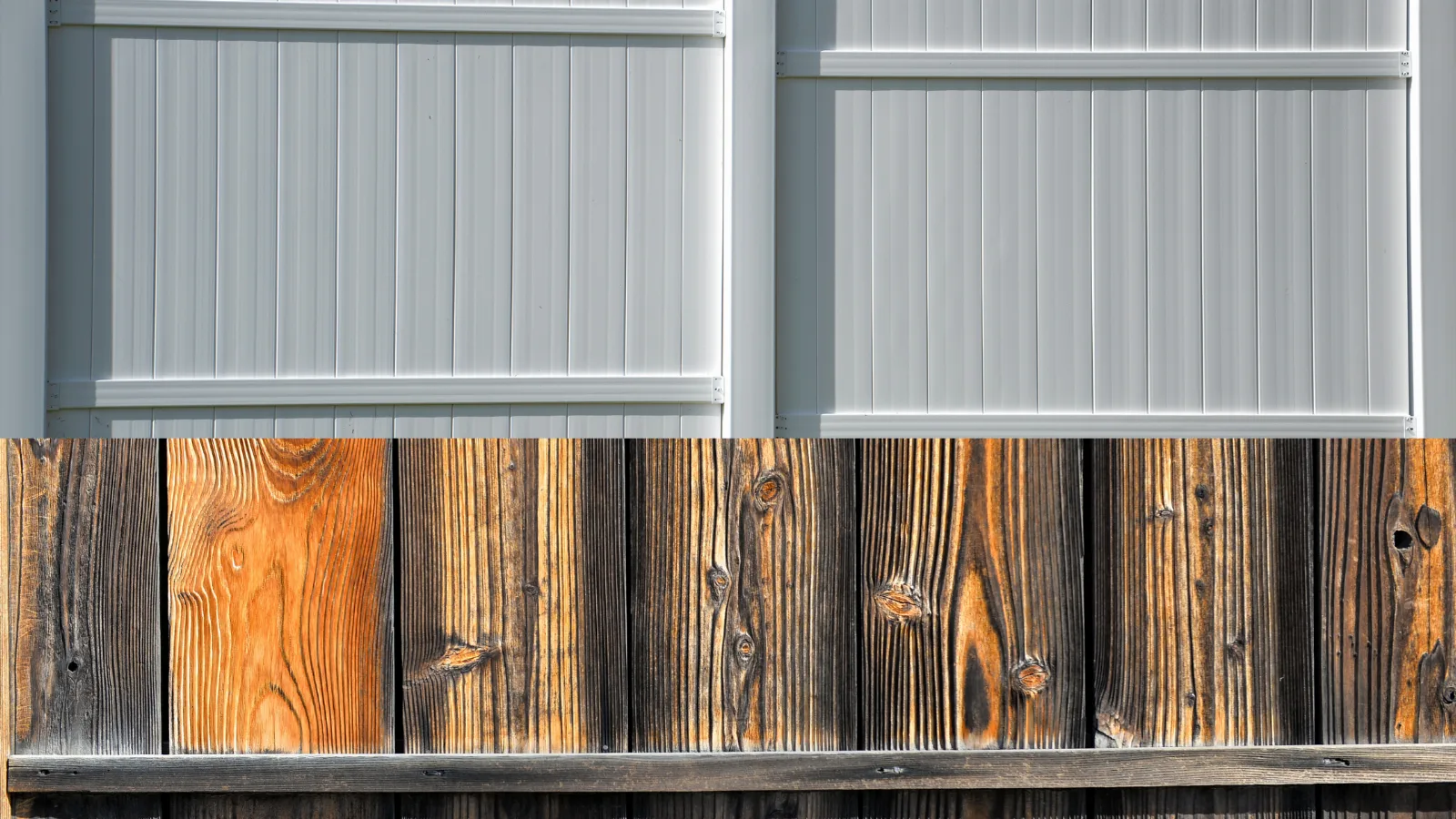
If you’re comparing vinyl and wood fencing, you’re not alone they’re the two titans of backyard boundaries in Orlando. One speaks of tradition. The other speaks technology. Both promise privacy, security, and curb appeal. But the difference isn’t just in appearance, it’s in endurance.
Because here’s the truth: Central Florida isn’t an easy place for fences to live. The humidity, hurricanes, and relentless UV exposure don’t care how clean your lines or fresh your stain looks. Add in HOA design rules and local permit codes, and your choice becomes less about preference and more about performance.
This guide strips away the marketing fluff to show what actually matters the real cost of vinyl vs. wood fencing, from installation to lifetime upkeep. No inflated quotes, no fine print, just clear numbers and honest trade-offs so you can choose the fence that fits your home, your budget, and your long-term goals.
At Straightline Fence, we install both wood and vinyl fences built to handle Florida’s climate. Here’s how they compare.
1. Average Cost to Install a Fence in Orlando (Quick Overview)
Let’s get straight to the real numbers.
Material | Avg. Cost per Linear Foot | Typical Project Total (150Ft) | Lifespan/Maintenance |
Wood | $13.50–$17+ | $2,250–$5,250 | 12–20 years/High |
Vinyl | $16.70–$22.50 | $3,000–$6,000+ | 25–30 years/Very Low |
In Orlando, vinyl fencing costs more upfront, but that’s the entry fee to long-term efficiency. You pay once, and it pays you back in time saved, repairs avoided, and weekends not spent sanding, staining, or sealing.
Wood, on the other hand, is your low-cost launchpad. Ideal for short-term ownership or projects where aesthetics and flexibility outweigh longevity. This isn’t about which fence looks better. It’s about which one performs better for the way you live and how long you plan to stay.
2. Material Overview: The Look, Feel, and Function
A fence isn’t just a boundary, it’s a statement. But the difference between natural and engineered goes deeper than looks. It’s about control. Maintenance. Longevity. And how much you’re willing to trade time for money.
Wood Fencing: Natural & Customizable
Wood is the original. The warm, traditional look that never lost its place in the Florida landscape.
- It bends to your vision, stain it, paint it, shape it with decorative tops. It’s flexible, human, and customizable.
- But it asks for commitment. Humidity, rain, and UV beat it down year after year. Without sealing or staining, wood ages fast and unevenly.
In Orlando, the go-to materials are pressure-treated pine, cedar, and cypress, each offering its own balance of price, color, and resistance. Wood is ar,t but it’s high-maintenance art.
Vinyl Fencing: Modern & Maintenance-Free
Vinyl is the evolution. It’s engineered precision clean lines, no splinters, no rot. Built for the homeowner who values durability over ritual.
- It doesn’t warp. It doesn’t fade. It doesn’t invite termites to dinner.
- Available in white, tan, gray, or even woodgrain finishes, vinyl adapts to the modern Orlando neighborhood. HOA-friendly, weather-proof, and unbothered by time.
- No paint. No stain. Just a rinse once or twice a year.
Vinyl isn’t maintenance-free it’s maintenance irrelevant.
3. Installation Cost Comparison (Orlando Market Data)
Numbers don’t lie. They define your real options. Below is what Orlando homeowners are actually paying, not the lowball estimates you see online.
Wood Fence Installation Costs
Wood is the gateway option, affordable, customizable, and familiar. But its price hides in the upkeep.
Average per linear foot: $13.50–$17+
150 ft privacy fence: $2,250–$5,250
Add-ons: gates ($250–$500), staining ($300–$600), disposal of old fence ($150–$300)
Wood feels cheaper upfront. But every gallon of stain, every weekend of maintenance, pushes that total closer to parity with vinyl over time. It’s short-term savings traded for long-term effort.
Vinyl Fence Installation Costs
Vinyl is the systemized upgrade with a higher initial cost and lower lifetime drag.
Average per linear foot: $16.70–$22.50
150 ft privacy fence: $3,000–$6,000+
Add-ons: gates ($400–$800), color upgrades ($200–$500)
You’re not paying for looks, you’re paying for longevity. One clean install, zero repaint cycles, no decay. Over 25 years, vinyl wins by design, not by chance.
Local Insight
Orlando’s humidity, sandy soil, and storm exposure all raise the bar. Contractors dig deeper posts. Use corrosion-resistant fasteners. Reinforce stability against summer wind loads.
That adds cost, but it also adds survival. Because in Florida, cutting corners isn’t cheaper. It’s expensive later.
4. Long-Term Cost of Ownership
Short-term thinking builds expenses. Long-term thinking builds value. Fencing is no different. Here’s how the math breaks down when you zoom out and factor in more than the install.
Category | Wood Fence | Vinyl Fence |
Upfront Cost | Lower | Higher |
Maintenance | Requires sealing/staining every 2–3 years | Minimal (rinse with hose) |
Repair Costs | Moderate to high | Very low |
Longevity | 12–20 years | 25–30 years |
Resale / Value | Adds curb appeal, natural look | Adds modern appeal, low upkeep |
Environmental Impact | Natural material, biodegradable | Recyclable PVC, long lifespan |
Wood looks cheaper on paper. Vinyl wins in real time. Every coat of stain, every warped board, every post that rots out, that’s your “hidden cost.”
Vinyl removes the variables. No maintenance loop. No recurring expense. Just one payment that compounds in durability over decades.
In Orlando’s climate, vinyl typically lasts nearly twice as long as wood, especially during heavy rain seasons, making it the more cost-effective choice over time despite the higher initial price. When humidity is constant and UV is relentless, lifespan isn’t luck. It’s engineering.
5. Climate & Maintenance Considerations in Florida
Florida doesn’t just test fences, it exposes them. Humidity. Sun. Salt. Insects. Storms. Every element here is a stress test. The fence that lasts is the one built with that reality in mind.
- Humidity: Wood breathes, and in Florida, that’s a problem. It absorbs moisture, swells, and eventually warps or discolors. Vinyl doesn’t. It stays dimensionally stable, immune to the damp cycles that break down organic fibers.
- Sun Exposure: UV radiation is relentless. Paint fades. The stain dries out. Boards crack. Vinyl’s built-in UV inhibitors lock in color and shape, even under year-round exposure.
- Hurricane Season: Wind is the real enemy. Vinyl and aluminum post systems can be reinforced with deeper footings and steel inserts to withstand gusts that snap standard wood posts in half. Strength isn’t optional here; it’s survival.
- Termites & Insects: Florida soil is alive, literally. Wood attracts termites unless it’s pressure-treated or chemically protected. Vinyl? Pest-proof by design. No cellulose, no feast.
- Salt Air (Coastal Zones): If you’re near the coast, wood degrades faster. Salt air corrodes nails, weakens joints, and stains finishes. Vinyl shrugs it off. Salt can’t penetrate what’s not porous.
Straightline Fence builds with Florida-tested hardware, reinforced concrete footings, and corrosion-resistant fasteners engineered for heavy rainfall and shifting soil. It’s not just installation it’s adaptation. And that’s what keeps a fence standing when the weather doesn’t play nice.
6. Aesthetic & Neighborhood Preferences
Fences don’t just mark property lines, they define character. In Orlando, that character changes by neighborhood, by HOA, by era. What fits in Baldwin Park won’t fly in a 1970s ranch near Conway. Style matters, but compliance issues matter more.
- Wood: The timeless choice. Natural. Rustic. Imperfection in a way that feels human. It blends seamlessly into older Orlando neighborhoods, rural properties, and homes surrounded by mature oaks. Every board tells its own story, and that’s the appeal. But with that charm comes maintenance and variance. No two boards age the same, and that’s either beauty or chaos, depending on your taste.
- Vinyl: The modern archetype. Clean. Symmetrical. Predictable. HOAs love it because it enforces order and uniformity that keeps property values consistent. You’ll see it across Lake Nona, Winter Park, and Clermont subdivisions, where design guidelines favor sleek over rustic. Vinyl doesn’t just look good, it seems the same, year after year.
At the end of the day, your fence is both architecture and agreement. It speaks to your taste and your neighborhood’s rules. See our Wood Fence Gallery to explore natural designs that age with grace. Explore Vinyl Fence Installation in Orlando to see clean, modern builds that last without the upkeep.
7. Environmental Impact
Sustainability isn’t just about materials. It’s about lifespan, maintenance cycles, and what happens when your fence reaches the end of its life. Every decision compounds either toward waste or endurance.
- Wood: Renewable, yes, but not pure. Most wood fencing in Florida is pressure-treated to resist rot and termites, which means chemical preservatives, disposal limitations, and regular refinishing. Each stain or sealant adds another layer of environmental cost over time. Wood’s strength is its natural origin; its weakness is how much it takes to preserve that origin in Florida’s climate.
- Vinyl: Engineered, not grown. Made from PVC, a synthetic polymer that’s long-lasting by design. The trade-off? It’s not “organic,” but it offsets that through sheer longevity. A vinyl fence can last twice as long as a wood fence, cutting replacement waste in half. Many modern systems now use recycled vinyl cores and are fully recyclable at the end of life. That’s not marketing, it’s evolution.
In short, wood returns to nature faster, but vinyl resists the cycle longer. And in sustainability math, lifespan is leverage. Straightline Fence partners with eco-conscious suppliers who offer recycled vinyl options and responsible disposal for old materials, keeping more out of Florida landfills and less on your conscience.
8. Which Fence Is Right for You?
The right fence isn’t about trends, it’s about alignment. Budget. Longevity. Aesthetics. How long have you actually lived behind it? Each material has its own logic. You just need to match it to yours.
Choose Wood if you want:
- A classic look that feels natural and warm.
- The freedom to customize with stains, paints, or decorative tops.
- A lower upfront investment for short-term projects or quick flips.
Choose Vinyl if you prefer:
- A modern, uniform design that stays sharp year after year.
- Minimal maintenance and no repainting cycles.
- Long-term savings through durability and stability.
Mini Checklist (Decision Logic)
- You plan to stay in your home long-term → Vinyl pays off.
- You’re flipping or renting → Wood offers affordable curb appeal.
- You’re in a storm-prone or HOA area → Vinyl holds up best.
In Orlando’s climate, the smarter fence isn’t just about cost, it’s about endurance. Wood is traditional. Vinyl is evolution. Both work, but the question is: which one works for you?
Frequently Asked Questions (FAQs)
What’s the lifespan difference between wood and vinyl fences in Florida?
Wood ages. Vinyl endures. In Florida’s climate, that’s the entire equation. A well-maintained wood fence survives 12–20 years. Vinyl? 25–30 with no maintenance loop. Same sun. Same storms. Different outcomes.
Is vinyl fencing worth the higher upfront cost?
Yes, if you think in decades, not weekends. Vinyl isn’t a purchase; it’s an escape from upkeep. Pay once, and you’re done. No paint. No rot. No rework. Over time, it doesn’t just cost less, it compounds value.
Which fence handles hurricanes better?
Vinyl wins by design, not luck. Reinforced posts. Deep-set concrete footings. Structural flexibility without fracture. Wood absorbs the hit. Vinyl redirects it. Strength engineered, not assumed.
Can vinyl fences look like real wood?
They can and they do. Modern vinyl replicates woodgrain so precisely that most neighbors can’t tell the difference. The only giveaway? Yours won’t fade, warp, or peel.
What’s the best wood type for fences in humid weather?
Florida humidity demands survivors: pressure-treated pine, cedar, and cypress. Each resists decay longer, but only if sealed. Skip the maintenance, and the climate collects its fee.
How often should you stain a wood fence in Orlando?
Every 2–3 years. Florida’s sun and rain don’t negotiate. Protection isn’t optional; it’s the only way to keep wood from surrendering to the weather.
Why Get a Quote from Straightline Fence
Most fence companies sell materials. We sell certainty. You don’t need guesswork, you need numbers that make sense. Real measurements. Transparent pricing. No hidden fees. Every quote we give is built from the ground up: property data, material breakdowns, labor timelines, and hardware that’s built for Florida’s weather, not against it.
We don’t outsource. We don’t inflate. We don’t hide behind “starting at” pricing. We are licensed, insured professionals installing wood and vinyl fences designed for one thing to outlast the climate they live in.
Call us at (407) 593-1888 or visit bestpricefence.com to get your free estimate. Because in Central Florida, cheap fences don’t stay cheap. Straightline Fence builds the kind that lasts.
Keep reading
Fence Repairs to Make Before Florida Storm Season Hits
Storm season doesn’t send a warning text. It shows up uninvited, hits hard, and exposes every weak point in your fence that you have ignored. At our Orlando fence...
How to Choose the Right Fence for a Central Florida Home
A fence isn’t just something you add at the end of a project; it shapes how your property feels and functions every single day. It affects privacy, safety, curb...
How Much Does a Wood Fence Cost in Orlando, FL (2025 Prices)
How about installing a wood fence around your home? It’s one of the most timeless and practical ways to add privacy, beauty, and character to your property. In a...